Temp Event Staffing in St. Paul, MN: Rates, Ratios & How to Hire for 2026

Event Staffing at Northland Staffing

Events in the Twin Cities are bigger business than ever — and the number one reason they fall short isn’t the venue or the food. It’s not having enough trained staff on the floor when it counts. Whether you’re running a corporate gala at the Saint Paul RiverCentre or a pop-up festival on Rice Street, finding reliable temp event staffing in St. Paul can make or break the guest experience — and your reputation as a planner.

The good news? The Twin Cities has a strong local staffing market. You don’t have to scramble for workers the week of your event or roll the dice on unvetted freelancers. You just need to know what it costs, how many people to book, and what local factors to plan around.

This guide covers all of it: 2026 staffing rates for St. Paul events, recommended staff-to-guest ratios, cultural and logistical factors that matter in this market, and a clear step-by-step process for hiring temp event staff fast. By the end, you’ll know exactly what to ask — and who to call.

What Is Temp Event Staffing and Who Needs It in the Twin Cities?

Temp event staffing means hiring short-term workers for a specific event. You’re not bringing on a permanent employee. You’re booking trained, vetted staff for a single event day — or a short run of dates — through a local staffing agency. The agency acts as the employer of record, handling payroll taxes, workers’ compensation insurance, and background checks. You pay an all-inclusive hourly bill rate and focus on running your event.

Common Roles Filled Through Temp Event Staffing

  • Greeters and registration staff — check-in tables, badge scanning, guest direction
  • Servers and floor assistants — food and beverage service, tray passing, table maintenance
  • Brand ambassadors — product demos, guest engagement, promotional events
  • Bartenders — full bar service, beer and wine service, cocktail events
  • Event supervisors and team leads — overseeing floor staff, handling real-time issues

Who uses temp event staffing in the Twin Cities? Corporate event planners, nonprofit fundraising teams, venue coordinators, trade show organizers, festival producers, and private event hosts all rely on local staffing agencies. If you need professional, reliable staff for a specific date — and you don’t have the bandwidth to recruit, screen, and schedule them yourself — a local agency is the faster, lower-risk option.

The main reason planners choose agencies over hiring directly is reliability. Reputable Twin Cities agencies maintain standby worker pools, guarantee fill rates, and handle last-minute replacements so you’re not scrambling the morning of your event.

From the field: In our experience staffing Twin Cities events, the most common last-minute request is for registration desk staff when guest counts spike unexpectedly the week before an event. Building a buffer into your booking from the start prevents a lot of day-of stress.

St. Paul Event Staffing Rates: What to Budget in 2026

How Much Does Temp Event Staffing Cost in St. Paul, MN?

Temp event staffing in the Twin Cities market runs $27–$36 per hour for standard roles and $40–$60 per hour for specialized or supervisory positions on an all-inclusive basis in 2026. These are bill rates — the all-in cost you pay the agency, which covers the worker’s wages, payroll taxes, workers’ compensation insurance, and agency overhead. Workers are W-2 employees of the agency, not 1099 contractors. Minnesota’s minimum wage as of January 1, 2026 is $11.13 per hour, setting the floor for all event worker wages in the state.

RoleAll-Inclusive Bill Rate (2026)Notes
Event greeter / registration staff$27–$36/hrStandard service roles
Server / floor assistant$27–$36/hrFood & beverage service
Bartender$36–$45/hrHigher for TIPS/ServSafe-certified staff
Brand ambassador$36–$45/hrPromotional and experiential roles
Event supervisor / team lead$45–$60/hrSpecialty and leadership roles

Most agencies require a minimum of 4 hours per worker per booking. Rush requests under 48 hours are sometimes possible but often carry an added fee. The standard recommended lead time in the Twin Cities market is 2–4 weeks for most events, with same-week backfills available depending on role type and availability.

What Affects the Price?

A few factors push rates up or down. Lead time is the biggest lever — the earlier you book, the more selection you have at standard rates. Short-notice or same-day requests cost more because the agency pulls from standby lists on short notice. Role complexity matters too: a TIPS-certified bartender or an event supervisor commands a higher rate than a general greeter. Dress code requirements, event duration, and overall crew size also factor in.

It’s worth understanding what you’re not paying for when you go through an agency. Payroll taxes, workers’ compensation, background check fees, and no-show backup costs are all built into the bill rate. When you factor in your own time to recruit, screen, and schedule workers independently, the agency option consistently wins on both total cost and certainty.

Recommended Staffing Ratios for St. Paul Events

One of the most common and costly mistakes planners make is underestimating how many staff they need. Industry data shows that no-show rates in food and event service run 10–15% higher than in other industries — meaning even a fully booked crew can show up short. Use these ratios as your baseline, then build in a buffer.

Event Type / Service StyleIndustry-Standard RatioSource
Plated dinner1 server per 10–12 guestsPremier Staff / Cvent
Buffet service1 server per 20–25 guests; 1 staff per 3 chafing dishesPremier Staff / Party Waiters
Cocktail reception / tray-passed1 server per 25 guestsOn The Fly Tapsters
Bar service — full bar1 bartender per 50 guestsMultiple industry sources
Bar service — beer & wine only1 bartender per 75 guestsServe & Savour
Trade show / conference registration1 staff per 75 expected attendeesPremier Staff
Events with 6+ staffAdd 1 captain / supervisorParty Waiters / On The Fly Tapsters

Simple formula: divide your guest count by the ratio for your event type, then add 10–15% as a buffer for no-shows and breaks. For events with more than 20 staff, plan for at least 2–3 standby workers on call. Having one extra person available costs far less than running an undermanned event during your busiest hour.
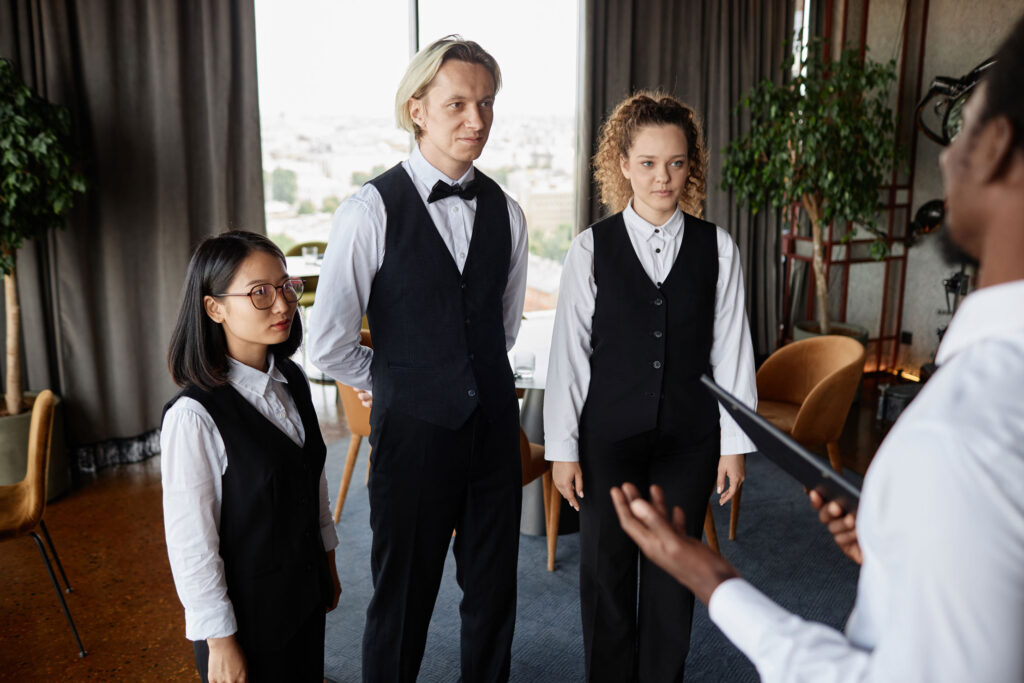
Simple formula: divide your guest count by the ratio for your event type, then add 10–15% as a buffer for no-shows and breaks. For events with more than 20 staff, plan for at least 2–3 standby workers on call. Having one extra person available costs far less than running an undermanned event during your busiest hour.

Cultural and Logistical Factors in St. Paul Event Planning

St. Paul is one of the most culturally diverse cities in the Midwest — and that shapes what good event staffing looks like here. According to 2020 Census data, St. Paul is home to the largest urban Hmong population in the United States, with more than 36,000 Hmong residents — about 10.9% of the city’s population. The Twin Cities metro is also home to the largest Somali community in the U.S., with approximately 84,000 Somali-descent residents in the area. Add a significant Latino community making up 9.7% of St. Paul’s population and students from families speaking 90 different languages in the city’s public schools, and you have one of the most diverse event markets in the country.

That diversity shapes the events being planned here. Hmong New Year celebrations, Somali wedding banquets, Eid gatherings, Cinco de Mayo festivals, and East African cultural events are all part of the St. Paul event calendar year-round. Working with a local agency that has multilingual staff and genuine experience with culturally specific events is a real operational advantage — not just a nice-to-have.

From the field: We’ve staffed Hmong New Year celebrations and corporate galas in the same week. The venue briefing looks different for each, and our staff are trained for both. Cultural awareness isn’t an add-on — it’s part of how we prep every team.

The Twin Cities event calendar also has clear peak demand periods. Late August is the single busiest stretch, driven by the Minnesota State Fair, which drew nearly 1.93 million visitors in 2024 — the fifth-highest attendance in the fair’s 165-year history, with five single-day records broken. If your event falls during the State Fair window (typically the last 12 days of August through Labor Day), book your staffing 3–4 weeks out at minimum. Spring (April–June) is the next busiest window, heavy with nonprofit galas and corporate end-of-quarter events. December fills fast with holiday parties.

Venue logistics in downtown St. Paul add another layer. Many venues have loading dock restrictions, limited staff parking, and specific check-in protocols. For any event serving food, Minnesota requires a Certified Food Protection Manager (CFPM) on-site — someone who has passed an approved exam such as ServSafe and is registered with the Minnesota Department of Health. CFPM certification is valid for three years. For events serving alcohol, TIPS or ServSafe alcohol certification is standard practice and often required by venue operators. Ask any staffing agency upfront which certifications their workers hold.

How to Hire Temp Event Staff in the Twin Cities: Step-by-Step

The process is straightforward once you know what information to have ready. Here’s how to move from “I need staff” to “staff confirmed” as efficiently as possible.

  • Define your event details. Have your event date, location, estimated guest count, event type, dress code, and start/end times ready before you call — including setup and breakdown. Know what roles you need and any special requirements such as bilingual staff, TIPS-certified bartenders, or food handler certification.
  • Contact the agency early. The standard recommended lead time in the Twin Cities is 2–4 weeks. For large crews of 50 or more, or events during peak season, aim for 3–4 weeks out. Rush requests can often be filled within 48–72 hours but may cost more and limit your selection.
  • Review the roster and briefing process. A reputable agency will walk you through who’s showing up and what they’ve been briefed on. Always ask about the no-show replacement policy before you confirm — a good agency guarantees fill rates or adjusts your invoice.
  • Share your floor plan at least 72 hours before the event. Pre-assigning staff to specific zones before they arrive eliminates confusion during setup. It’s a small step that consistently makes the day run smoother.
  • Set up day-of coordination. Know who your on-site staff lead is, how workers check in, and how to reach your agency contact if something comes up. After the event, provide feedback — it’s how you build a preferred worker list for future bookings.

From the field: Clients who share a venue floor plan early almost always have smoother events. Pre-assigning staff to zones before things get busy means workers know exactly where to go — and you spend your opening hour focused on guests, not directing traffic.

Frequently Asked Questions About Temp Event Staffing in the Twin Cities

How much does temp event staffing cost in St. Paul in 2026?

All-inclusive bill rates in the Twin Cities run $27–$36 per hour for standard roles like greeters, registration staff, and servers, and $40–$60 per hour for specialty and supervisory roles. These rates cover the worker’s wages, payroll taxes, workers’ compensation, and agency overhead — nothing extra on your end. Minnesota’s minimum wage as of January 1, 2026 is $11.13 per hour, which sets the floor for all event worker pay in the state.

How many temp event staff do I need for my event?

Use industry-standard ratios as your starting point, then add a 10–15% buffer for no-shows and breaks. For plated dinners, plan 1 server per 10–12 guests. For cocktail receptions and tray-passed service, 1 server per 25 guests. For bar service, 1 bartender per 50 guests for a full bar or 1 per 75 for beer and wine only. For any event with 6 or more staff, add a captain or supervisor to manage the floor.

How far in advance should I book temp event staff in St. Paul?

For most events, 2–4 weeks ahead is the standard. For larger crews or events during the Minnesota State Fair window, spring gala season, or December, aim for 3–4 weeks out at minimum. Rush requests within 48–72 hours are often possible but may limit your worker selection and cost more. The earlier you book, the better your options.

What happens if a temp staff member doesn’t show up on event day?

No-show rates in event and food service run 10–15% higher than in other industries, so it’s a real planning factor. A reputable staffing agency maintains a standby pool and guarantees fill rates — they’ll send a replacement or adjust your invoice if they can’t cover the spot. Always ask about the no-show replacement policy before confirming any booking. It’s one of the most important questions you can ask.

What certifications should temp event staff have for St. Paul events?

For events serving food on-site, Minnesota requires a Certified Food Protection Manager (CFPM) on the team — someone who has passed an approved exam like ServSafe and registered with the Minnesota Department of Health. CFPM certification is valid for 3 years. For alcohol service, TIPS or ServSafe alcohol certification is standard practice and often required by venue operators. Ask any agency upfront which certifications their workers hold before you book.

Are there cultural considerations for event staffing in St. Paul?

Yes — and they matter more here than in most U.S. markets. According to 2020 Census data, St. Paul has the largest urban Hmong population in the United States with over 36,000 residents. The Twin Cities metro is also home to the largest Somali community in the country, with approximately 84,000 residents of Somali descent. Working with a local agency that has multilingual staff and direct experience staffing culturally specific events — from Hmong New Year celebrations to Somali wedding banquets — is a genuine advantage in this market.

What are the busiest seasons for event staffing in the Twin Cities?

Late August is peak season, driven by the Minnesota State Fair, which drew nearly 1.93 million visitors in 2024 — the fifth-highest attendance in the fair’s history, with five single-day records broken. Book staffing 3–4 weeks out if your event falls in that window. Spring (April–June) is the next busiest stretch with galas and corporate events, and December fills quickly with holiday parties.

How are temp event staff screened and vetted?

Professional staffing agencies run background checks, verify work eligibility, and conduct interviews before placing anyone at an event. Workers placed through reputable agencies are W-2 employees — not 1099 contractors — meaning the agency carries the employment liability, not you. Many agencies also provide food safety training and alcohol service certification. Ask what the screening process looks like before you commit to a booking.

Can I request the same temp staff for future events?

Yes — and most agencies encourage it. Once you find workers who performed well at your event, you can request them by name for future bookings subject to availability. This is especially valuable for recurring events like annual galas, monthly pop-ups, or quarterly conferences where consistency of service matters to your guests.

What information do I need to have ready when booking temp event staff?

To get a fast, accurate quote have these details ready: event date, location, and venue; estimated guest count; number of staff needed and roles required; dress code or uniform requirements; start and end times including setup and breakdown; and any special skills needed such as bilingual staff or TIPS-certified bartenders. Having this ready when you reach out cuts the booking process down significantly.


What Does a Temp Agency Do? Your Guide to Finding Light Industrial Jobs in Minneapolis

Light Industrial Staffing at Northland Staffing

U.S. staffing companies place about 16 million temporary and contract workers each year, according to the American Staffing Association. If you have searched for a warehouse, manufacturing, or distribution job in Minneapolis, you are not alone.

A temp agency can be the fastest way to get hired. It connects you with local employers who need reliable workers right now. You pay nothing out of pocket, and you can start earning within days.

This guide breaks down what a temp agency does, what light industrial work looks like, and how the staffing process works from your first visit to your first shift. We also cover how to pick the right agency near you in Minneapolis.


What Does a Temp Agency Do?

A temp agency connects job seekers with companies that need workers on a temporary, temp-to-hire, or contract basis. The agency handles recruiting, screening, and payroll. The employer fills open roles fast, and you start earning quickly.

In light industrial fields like manufacturing, warehousing, and distribution, temp agencies are common. Demand for workers shifts with production schedules and seasonal volume. You apply at no cost, complete a short skills review, and can be matched with an open position within days. The agency stays your employer of record during the assignment. That means it manages your pay, benefits eligibility, and workplace-injury coverage.

→ Browse open light industrial jobs near you

How To Initiating Positive Discussions With Leadership


How the Temp Agency Relationship Works

A temp agency is a company that finds and places workers in short-term or temp-to-hire roles. It acts as a bridge between you and the employer.

Three parties are involved. You are the worker. The agency recruits, screens, and pays you. The employer directs your daily tasks on the job site. The employer pays the agency a fee for finding and managing staff. You never pay a dime.

There are three common placement types:

Placement TypeHow It WorksBest For
TemporaryYou work a set assignment with a clear end date.Seasonal peaks, short-term projects, or trying out a new field.
Temp-to-HireYou start as a temp with the chance to go permanent.Workers who want to test a company before committing.
ContractYou fill a specific role for a fixed term, often at a higher skill level.Skilled trades or specialized production roles.


At our Central Avenue office in Minneapolis, most candidates receive their first assignment within a few days of completing intake. The speed depends on open roles and your availability, but the process moves fast.


What Does Light Industrial Work Mean?

Light industrial work covers roles in manufacturing, assembly, packaging, warehousing, and distribution. These jobs involve physical tasks, but they are not heavy construction or mining. Most take place in climate-controlled facilities or organized warehouse floors.

Shifts often run first, second, or third shift. Many Minneapolis-area employers add weekend shifts during busy seasons. A common example of light industrial work is picking and packing orders in a distribution center during peak shipping months.

Here are some of the most common light industrial job titles:

  • Warehouse Associate – Receives, sorts, and stores incoming products.
  • Forklift Operator – Moves pallets and materials using powered equipment.
  • Machine Operator – Runs and monitors production-line machinery.
  • Picker/Packer – Pulls items from shelves and packs them for shipment.
  • Quality Inspector – Checks finished goods for defects before they ship.
  • Assembly Line Worker – Puts together parts or components on a production line.

Temp agencies are one of the top hiring channels in this sector. Employers need to scale up and down with demand, and a staffing partner lets them do that without slow hiring cycles.

→ Explore our light industrial staffing services


How the Staffing Process Works (Step by Step)

If you have never worked with a temp agency, the process is simple. Here is what to expect from start to finish.

  1. Apply online or walk in. You can fill out an application on our website or visit our Minneapolis office on Central Avenue. Either way works.
  2. Complete a short application and skills review. We ask about your work history, skills, and shift preferences. Some roles may include a quick skills check.
  3. Meet with a staffing coordinator. You sit down for a brief interview. This helps us match you to the right job, not just any job.
  4. Get matched with open positions. Based on your skills and schedule, we connect you with employers looking for workers right now.
  5. Accept an assignment and complete onboarding. Once you pick a role, we walk you through any required safety training or paperwork.
  6. Start work. We handle your payroll and stay in touch to make sure things go well on the job.

What to Bring to Your First Temp Agency Visit

  • A valid photo ID (driver’s license or state ID).
  • Your work history or a simple resume.
  • Any certifications you hold (forklift license, OSHA card, etc.).

Tip from our coordinators: completing your application online before visiting our Minneapolis office can cut your intake time in half. Most people finish the full process in one visit.


Benefits of Using a Temp Agency for Manufacturing and Warehouse Jobs

Searching for a manufacturing or warehouse job on your own can take weeks. A temp agency gives you a shortcut to open roles that may not be posted anywhere else.

According to the American Staffing Association, 76% of staffing employees say temping made them more employable. Here is why that number is so high:

  • Faster access to jobs. Many employers fill roles through agencies before posting them online. You see openings others miss.
  • Try before you commit. Temp-to-hire lets you work at a company before accepting a permanent offer. You get a real feel for the culture and the work.
  • No cost to you. The employer pays the staffing fee. You never owe the agency anything.
  • Built-in support. The agency handles your payroll, benefits eligibility, and safety compliance. If a problem comes up on the job, you have someone in your corner.

For workers in the Minneapolis area, these benefits add up fast. A local agency that focuses on light industrial roles already has relationships with the employers you want to work for.


How to Choose the Right Temp Agency Near You

Not every temp agency is the same. Some focus on office work. Others handle healthcare. If you want a manufacturing or warehouse job, look for one that specializes in light industrial staffing.

We hear from workers every week who switched to a local, industry-focused agency after getting lost in the shuffle at a large national firm. A smaller, local team can move faster and give you more personal attention.

Here is a quick checklist to use when you are comparing agencies:

  • Do they specialize in your field (warehouse, manufacturing, distribution)?
  • What do their Google reviews say about placement speed and communication?
  • Do they offer temp-to-hire paths, not just short-term gigs?
  • Is the office local enough for face-to-face support when you need it?

A nearby office means faster placement and a real person to talk to. That matters when you need work this week, not next month.

→ Visit our Northland staffing office


Find a Light Industrial Temp Agency in Minneapolis

Northland Staffing Solutions places workers in warehouse, manufacturing, and distribution roles across the Minneapolis area. Our office is at 4110 Central Ave NE, Suite 210B, Minneapolis, MN 55421.

We focus on light industrial staffing, cleaning staffing, event staffing, and clerical placements. Whether you want a temporary assignment, a temp-to-hire opportunity, or a contract role, we match you with local employers who need people now.

Stop by our office, give us a call, or apply online. You can also find our hours, directions, and reviews on our Google Business listing.

FAQs about Light Industrial Staffing in St. Paul

Are there temp agencies in St. Paul, MN that hire for warehouse and manufacturing jobs?

Yes. St. Paul and the surrounding Twin Cities metro area have several temp agencies that specialize in warehouse, manufacturing, and distribution jobs. The Northland area in particular is home to staffing offices that focus on light industrial placements. Many of these agencies serve workers across St. Paul, Maplewood, Roseville, Woodbury, and all of Ramsey County. If you are looking for a local agency that understands the manufacturing and logistics job market in this area, look for one that specializes in light industrial staffing rather than general office placements.
Explore our light industrial staffing services

How much do temp warehouse jobs pay in the St. Paul and Twin Cities area?

Pay for temp warehouse and light industrial jobs in the St. Paul metro area generally ranges from $16 to $25 or more per hour, depending on the role and your experience. Entry-level positions like picker/packer or warehouse associate typically start on the lower end, while forklift operators, machine operators, and quality inspectors often earn more. Many assignments also offer weekly pay, overtime opportunities, and shift differentials for second and third shifts. Your temp agency recruiter can give you specific pay details for open roles in your area.

Do I need experience to get a light industrial job through a temp agency?

Not always. Many light industrial and warehouse positions are entry-level and do not require previous experience. Employers often provide on-the-job training for tasks like picking, packing, assembly, and basic machine operation. Some roles — such as forklift operator — may require a certification, but many temp agencies will help you get certified or connect you with employers who train on-site. The most important qualities hiring managers look for are reliability, a willingness to learn, and the ability to show up on time every day.

Can a temp job in St. Paul turn into a full-time permanent position?

Yes, and it happens often. Temp-to-hire is one of the most popular placement types in the Twin Cities manufacturing and warehouse market. These arrangements usually last three to six months, giving both you and the employer a chance to see if the role is a good fit. Many Minnesota manufacturers and distribution centers prefer to hire this way because it allows them to evaluate workers on the job before making a permanent offer. If a long-term position is your goal, ask your temp agency about which assignments offer a temp-to-hire path.

What shifts are available for temp warehouse and manufacturing jobs near St. Paul?

Most light industrial employers in the St. Paul and greater Twin Cities area offer multiple shift options. First shift typically runs from around 6:00 AM to 2:30 PM, second shift from about 2:00 PM to 10:30 PM, and third shift from roughly 10:00 PM to 6:30 AM. Weekend-only and flexible schedules are also becoming more common as employers compete for reliable workers. Second and third shifts often come with premium pay, sometimes called a shift differential, which can add $1 to $3 more per hour to your base rate.

What should I bring when I visit a temp agency in St. Paul for the first time?

Bring a valid photo ID such as a driver’s license or state ID, your Social Security card or another document that proves work eligibility, and a basic list of your work history — even a rough outline is fine. If you have any certifications like a forklift license, OSHA card, or first aid training, bring those too. Completing the online application before your visit can speed up the process significantly. Dress comfortably but professionally, and be prepared for a short skills review and a conversation about what type of work you are looking for.

Is it free to use a temp agency to find a job in Minnesota?

Yes, it is completely free for job seekers. The employer — not you — pays the temp agency for its recruiting and placement services. There are no sign-up fees, no hidden charges, and no paycheck deductions for the agency’s services. This is true for temporary, temp-to-hire, and direct-hire placements. If any staffing agency ever asks you to pay money to find a job, that is a red flag.

What areas near St. Paul do temp agencies place workers in?

Temp agencies based in St. Paul and the Northland area typically place workers throughout the Twin Cities metro and surrounding communities. Common placement areas include Minneapolis, Maplewood, Roseville, Woodbury, Eagan, Shakopee, Brooklyn Park, Plymouth, Fridley, and Bloomington. The Minneapolis–St. Paul metro is a major distribution and manufacturing hub, so there are warehouse, production, and logistics openings spread across the region year-round. A local staffing office can help match you with opportunities close to home.
Visit our Northland staffing office to get started

How quickly can a temp agency in St. Paul get me a job?

Many workers go from their first agency visit to their first day on the job within a few days. In the light industrial and warehouse sector, turnaround is often fast because demand for workers stays high throughout the year and spikes during peak seasons like the holiday shipping rush. If you come prepared with your documents and are open to multiple shift options, placement can happen even faster. Applying online before your in-person visit also helps speed things along.

Do temp agency workers get benefits like health insurance and paid time off?

It depends on the agency and the length of your assignment. Many temp agencies offer benefits packages that can include health insurance, dental, and vision coverage after a qualifying period. Some agencies partner with third-party benefit providers so that workers can access affordable health coverage while on assignment. If your temp position converts to a permanent role through a temp-to-hire arrangement, you would typically receive the employer’s full benefits package once you are hired on permanently. Always ask your recruiter about available benefits when you sign up. Northland Staffing does offer health and life insurance benefits with paid time-off. Contact us today to learn more.

What is the difference between a temp agency and a staffing agency?

In everyday conversation, the two terms mean the same thing. Both refer to companies that connect job seekers with employers who need workers. You may also hear the terms employment agency, staffing firm, or placement agency — these all describe the same basic service. Some agencies focus on specific industries like light industrial, healthcare, or information technology, while others handle a wide range of job types. What matters most is finding an agency that specializes in the kind of work you want to do.

Are warehouse and manufacturing jobs in the Twin Cities available year-round?

Yes. The Minneapolis–St. Paul metro area is a major distribution hub, and warehouses and manufacturing facilities across the region hire throughout the year. That said, demand typically spikes before the holidays and during peak shipping seasons, which means even more openings and sometimes higher pay during those periods. Light industrial roles like warehouse associate, forklift operator, and machine operator are consistently among the most in-demand positions in the Twin Cities job market.
Browse open light industrial jobs near you

2026 Job Trends: How Work Is Evolving for Employers and Candidates

people working showing trending job growth going into 2026

Let’s be honest—the world of work is changing fast. Technology is everywhere, people want more flexibility, and the old rules about resumes and degrees are being rewritten.

Here at Northland Staffing Solutions, we see these changes every day. We work with incredible people and companies in light industrial, event staffing, cleaning, and clerical roles. Let’s talk about what’s really happening out there and what it means for you.


The Big Picture: What Everyone’s Talking About

Your Skills Matter More Than Your Diploma: Here’s good news—81% of companies now hire based on what you can actually do, not just what’s on your degree. Can you prove you’ve got the skills? You’re in the game.

Technology is Your Teammate, Not Your Replacement: AI and automation aren’t stealing jobs. They’re tools that make your job easier. The people winning are those who learn to work alongside these technologies.

Flexibility Is Expected: Whether it’s flexible shifts or understanding when life happens, companies that get this keep their best people.

Good Workers Are Hard to Find: If you’re reliable and skilled, you’ve got options. Employers are competing for talent, which means better pay and benefits.


Light Industrial Staffing at Northland Staffing

Light Industrial: Where the Real Work Gets Done

Manufacturing is growing steadily—1.7% in 2026 and 2.6% in 2027.

Let’s Talk Money: Manufacturing workers are making an average of $29 an hour, and those numbers keep climbing because companies are struggling to find good people.

You Don’t Need to Be a Tech Genius: About half of manufacturers are adding AI and automation, but 81% of the work still needs human hands and brains. You just need to be comfortable with scanners, tablets, and inventory systems. If you can handle a smartphone, you can learn these tools.

Work When It Works for You: Many companies offer premium pay for night, weekend, and holiday shifts—more options for everyone’s schedule.

Real Career Material: Data centers, biotech labs, and EV plants need trained, skilled professionals. There are actual career paths here.

Why Temp Work Makes Sense: For companies, Light Industrial temporary staffing handles seasonal peaks without long-term commitments. For workers, you get immediate income, learn new skills, and explore different companies before deciding where to land permanently.


Event Staffing at Northland Staffing

Event Staffing: Behind Every Great Event

The event industry is booming—heading toward $3.5 trillion globally by 2033.

Quality Over Quantity: Event organizers want people who show up on time, communicate well, and care about doing a good job. One reliable professional beats five mediocre ones.

Jack-of-All-Trades Wanted: Events aren’t simple anymore. One minute you’re handling registration, the next you’re helping with tech support. If you can roll with the punches, you’re exactly what organizers need.

Tech is Your Friend: About 62% of event companies use smart scheduling platforms that track everything in real-time. Fewer mix-ups, better communication.

Virtual + In-Person = Your Reality: With 123 million hybrid events happening, staff who can handle both the venue and online attendees are gold.

Perfect for Flexible Work: Events are temporary by nature. Perfect for temporary event staffing hires and candidates alike. If you like variety and schedule control, event staffing lets you pick and choose while building experience.


Cleaning Staffing Service at Northland Staffing

Cleaning Industry: Essential, Professional, and Growing

This industry is heading toward $800 billion globally by 2035.

Everyone Wants Good Cleaners: There’s a serious shortage—about 350,300 job openings yearly with 3% growth expected. That means better pay, better benefits.

Not All Cleaning is Equal: Cleaning a hospital, biotech lab, or data center requires real training in safety protocols, specialized equipment, and compliance. This specialized work pays better and offers career advancement.

Green is the New Standard: Companies are investing in eco-friendly products, water-saving technology, and sustainable practices.

Technology is Changing the Game: By 2026, 80% of major cleaning companies will use digital platforms for scheduling, quality checks, and tracking.

Health is Priority One: The antimicrobial coatings market alone is hitting $20.1 billion by 2026. This focus means more investment in the industry.

Flexibility When You Need It: Temporary Cleaning staffing positions let companies handle busy seasons without overwhelming regular staff, while workers find schedules that work around their lives.


Clerical Staffing Services at Northland Staffing

Clerical and Administrative: More Strategic Than Ever

While some traditional clerical jobs are declining (7% for general clerks), administrative professionals who adapt are thriving.

Your Role is Bigger Now: Today’s admin professionals coordinate projects, manage budgets, support HR, and help with strategic planning. The job has grown up, and so has the pay.

AI Does the Boring Stuff: Yes, AI helps with emails and routine tasks. But 83% of managers pay MORE for people who use AI smartly while bringing human judgment and relationship skills. Technology isn’t replacing you; it’s making you more valuable.

Specialized Roles are Booming: Medical secretaries are growing 22%. Customer experience specialists and executive assistants with strategic responsibilities are in high demand.

Temporary Positions Have Their Place: Big project coming? Someone on leave? That’s when temporary admin/clerical staffing make perfect sense. For workers, these assignments offer variety and industry exposure.


What You Should Actually Do

If You’re an Employer:

  • Pay what people are worth—wages are up
  • Be flexible with schedules where you can
  • Invest in training on new tech and specialized skills
  • Partner with Northland Staffing Solutions for demand fluctuations
  • Build strong culture—people work where they feel valued

If You’re Looking for Work:

  • Show what you can do—skills often trump degrees
  • Stay curious and keep learning
  • Consider temporary work for experience and networking
  • Highlight soft skills—reliability and communication never go out of style
  • Find employers offering training and advancement

The Bottom Line

Work in 2026 looks different, but different can be good. Whether you’re in light industrial, event staffing, cleaning, or administrative work, there are real opportunities. Wages are better, career paths are clearer, and companies are treating workers like the valuable assets they actually are.

At Northland Staffing Solutions, we’re here to help make sense of all this. Need to staff up quickly? Looking for your next opportunity? We’ve got the expertise, the connections, and honestly, we just like helping people find the right fit.

Your Questions Answered (FAQS)

What jobs will be in highest demand in 2026?

Healthcare (home health aides, medical assistants), skilled trades (electricians, HVAC techs), tech jobs (software developers, cybersecurity), and in our world—light industrial, event staffing, cleaning, and administrative work—especially if you’ve got the right skills and can work with technology.

How is AI affecting jobs in 2026?

AI is helping more than hurting. About 88% of companies use AI in hiring now, and while some basic tasks are automated, AI creates demand for workers who use these tools effectively. In manufacturing, 81% of work still needs actual humans. Winners are people who combine AI skills with critical thinking and people skills.

What industries are hiring the most in 2026?

Healthcare is #1—over 2.3 million new jobs expected by 2033. Tech and professional services are fastest-growing. Manufacturing is steady at 1.7% growth. The cleaning industry is marching toward $800 billion globally by 2035. Events are projected to hit $3.5 trillion by 2033.

Is skills-based hiring really replacing degree requirements?

Absolutely. 81% of companies now hire based on skills, not degrees. 94% say they trust demonstrated abilities more than a diploma. This is especially true in light industrial, technical, and administrative roles. Some specialized positions might still want degrees, but the trend is clear—show what you can do.

What are the benefits of temporary staffing in 2026?

For companies: flexibility for busy seasons and special projects without long-term commitments, plus “try before you buy” with potential permanent employees. For workers: immediate income, explore different companies, build skills, schedule flexibility, and sometimes transition to permanent positions. Win-win.

How much do light industrial workers make in 2026?

Manufacturing workers average $29-35 per hour. Entry-level starts around $16-18 per hour. Specialized environments (data centers, biotech, advanced manufacturing) can pay $25-40+ per hour. Premium pay for nights, weekends, and holidays increases earnings further.

What skills are most important for administrative jobs in 2026?

Digital tools (Microsoft Office, Google Workspace, project management software), AI literacy, communication, organization, adaptability, and customer service. Admin pros who can coordinate projects, manage budgets, use CRM systems, work with AI tools, AND bring that human touch are most valued. Specialized skills can bump salary up 83%.

Are cleaning jobs considered skilled work now?

Yes! Especially in specialized environments—healthcare facilities, data centers, biotech labs, manufacturing plants. These need trained professionals who understand compliance, specialized equipment, safety protocols, and sanitation standards. This means better career paths, higher pay, and actual professional development.

How has the event staffing industry changed?

Quality over quantity is the big shift. Organizers want reliable, professional, well-trained staff. Technology is everywhere—real-time tracking, smart scheduling. With 123 million hybrid events, you need both in-person and virtual capabilities. Cross-trained staff who can do multiple jobs are worth their weight in gold.

Will there be job growth in clerical and administrative roles?

Mixed. Basic clerical jobs are down 7% due to automation. But specialized administrative roles are booming. Medical secretaries up 22%. Executive assistants, customer experience specialists, project coordinators—strong demand and higher salaries. The trick is expanding your skills and embracing technology.

Ready to figure out your next move? Whether you’re building a team or finding a job, Northland Staffing Solutions is here to help. We know these industries inside and out, and we’re really good at matching the right people with the right opportunities. Let’s talk—give us a call today.

CAREER TIPS FROM TOP INFLUENCERS

Perhaps you dreamed of becoming a pilot or astronaut, yet career aspirations seemed unattainable. Some people choose professions like dentists and business, while others desire to transform and inspire the world. Why do some individuals succeed and others are challenged with the mere thought of starting a career? Let’s explore the advice of some of the greatest influencers who are impacting our world till this present day!

Steve Jobs co-founder of Apple encouraged people to go beyond the ordinary and believe in his or her individual potential. One of Steve’s famous quotes reads, “Have the courage to follow your heart and intuition. They somehow know what you truly want to become.” Only you know your innate gifts and skills, and the work environments conducive to your potential. At times a dream job fails to provide the needed resources or opportunities for career growth. In such instances get creative exploring other job opportunities with similar responsibilities, yet offering optimistic career outlooks.

Motivational coach and speaker Tony Robins shares insightful tips in an interview with Dan Roth LinkedIn’s Executive Editor. Tony encourages people to focus on who you want to be, and what you want to give? He goes on to share how we are all here to “deliver” and touch other people’s lives. For career success we determine how to give back and how to serve.

Another great influencer is the late Maya Angelou. Maya’s career advice is a golden nugget! Maya shares light on career intentions and driving forces for success stating, “You can only become truly accomplished at something you love. Don’t make money your goal. Instead pursue the things you love doing and then do them so well that people can’t take their eyes off of you.” Success brings a sense of accomplishment and fulfillment. If the driving force is rooted on helping others and manifesting meaningful change, success in your career is bound to follow. On the contrary, only seeking financial gain can limit career potentials and lead to dissatisfaction in the long-term.

Suze Orman is well-known for her financial advice, yet her work dedication began years before career success manifested. Suzie started as a waitress and worked her way up to the financial advisor and motivational speaker she is today. Suze recommends “thinking outside the box” and being open to different opportunities stating, “If it’s feasible, ask if you can volunteer or intern for a month or two. Who’s going to turn down someone offering to work for free?” Suze also recommends networking and asking friends and family to help in job searches.

One commonality seen in these great influencers is perspective. These people faced challenges like everyone does, yet they each focused on success and moving beyond the struggles. Rather than allowing difficulties to create roadblocks keep a positive outlook and career success is likely to follow.